| Mainstream media will only change if BN loses, says Kadir Jasin Posted: 07 Jul 2013 11:20 PM PDT 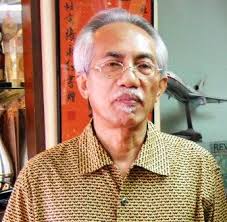
(TMI) - Kadir said Umno and the government used the media to vilify Anwar but the BN did badly in the 1999 general election as the Malays were split. The government then was returned to power because of the support of the non-Malays. The mainstream media owned by Umno and MCA are not expected to change its ways despite the poor performance by the Barisan Nasional in the last general election, an industry veteran said today. "Things will remain the same," said blogger and former New Straits Times Press group editor-in-chief Datuk A. Kadir Jasin. He said no editor would change the editorial policy when the media, whether print or electronic, was owned by the government or political parties. "They have to follow the agenda set by the owners," he said at an international seminar titled "General Electon 13: An analysis and aftermath" held at the International Islamic University in Gombak today. "The public will have to put up with them as Umno has became stronger in winning more seats compared to 2008," he said. In fact, he said some segments of the media reinforced old issues like playing up race and religion. Kadir said the mainstream media will change only when the party which controls them loses in the election. He said only then the media will change as what happened in countries like Indonesia, Thailand and South Korea. Kadir, who helmed NSTP for 12 years until 2000, said his own experience showed that it was difficult to promote change. He said it was the media which transformed former deputy prime minister Datuk Seri Anwar Ibrahim when he was in the government. "The government then attempted to use the media to destroy Anwar in a short span but failed miserably," he said. Kadir said Umno and the government used the media to vilify Anwar but the BN did badly in the 1999 general election as the Malays were split. The government then was returned to power because of the support of the non-Malays. Read more at: http://www.themalaysianinsider.com/malaysia/article/mainstream-media-will-only-change-if-bn-loses-says-media-veteran/ |
| Selangor opposition chief again declines PAC chair Posted: 07 Jul 2013 11:18 PM PDT 
(Bernama) - Selangor Opposition Leader Datuk Mohd Shamsudin Lias on Monday stood his ground and turned down an offer to chair the state public accounts committee, saying he would prefer to be just a member. The Sungai Burong assemblyman declined the offer after Menteri Besar Tan Sri Abdul Khalid Ibrahim (PKR-Pelabuhan Klang) tabled the motion which had the majority support of the house. "I thank the state government for proposing me as the chairman of the PAC. "However, I decline to accept the offer. I propose that the state government appoint another member of the house. I just want to be a committee member only," he told the state legislative assembly meeting. Abdul Khalid then proposed Ng Suee Lim (DAP-Sekinchan) as the chairman of the committee and it received the unanimous agreement of the house and was officially announced by Speaker Hannah Yeoh. On July 1, Mohd Shamsudin dismissed the motion of the state government proposing him as the chairman of the PAC and claimed that the appointment was insincere and had a political motive. He claimed that the appointment was conditional in that the Pakatan Rakyat wanted its representative to be appointed chairman of the PAC in the Dewan Rakyat. Yeoh denied that the appointment was conditional and urged Mohd Shamsudin to reconsider his decision. |
| It’ll be back, Jamil Khir says of child conversion law Posted: 07 Jul 2013 09:12 PM PDT 
Zurairi AR, MM The controversial Bill on unilateral child conversion to Islam will be resubmitted once the authorities "streamline" it, Datuk Seri Jamil Khir Baharom (picture) said today. Earlier this morning, the minister had withdrawn the disputed Administration of the Religion of Islam (Federal Territories) Bill 2013 from Parliament following vocal opposition to the proposed law, along with the Syariah Court Civil Procedure (Federal Territories) (Amendment) Bill 2013 and Syariah Criminal Procedures (Federal Territories) (Amendment) Bill 2013
"We will 'perkemaskan' (streamline) them in the future," Jamil Khir told reporters here.
He did not, however, specify when the Bills will be re-tabled, and explained that the authorities will fall back on the current laws in the meantime.
"We'll see, after consulting a number of bodies of every level, after that is done then we'll table it," he said.
Before the amended proposal, the law in effect was the Administration of the Religion of Islam (Federal Territories) 1993, also known as Act 505.
Last Friday, Deputy Prime Minister Tan Sri Muhyiddin Yassin said in a statement that the Cabinet had discussed the matter at length and decided to retract the Administration of the Religion of Islam (Federal Territories) Bill 2013 pending further study.
He was reported by national news agency Bernama as saying that the issue of a child's religious status, particularly in cases where either the mother or father is Muslim, should be discussed thoroughly among all relevant stakeholders before being made law.
"The Cabinet had agreed that the retraction of the Bill was necessary to ensure that the issue on the determination of the child's religion in such cases was resolved in a fair manner for everyone," he was quoted as saying.
All further amendments to the law contained in the Bill would also be retracted for now, Muhyiddin said.
The attempt to legislate single parent consent for child conversion to Islam had caught the attention of the Malaysian Consultative Council of Buddhism, Christianity, Hinduism, Sikhism and Taoism (MCCBCHST) and Bar Council shortly after it was tabled, with both calling the move unconstitutional.
The MCCBCHST went a step further and slammed the Cabinet as "insincere" for introducing the law despite a 2009 announcement by then law minister Nazri banning the unilateral conversion of minors to Islam.
The storm over proposed law resulted in a rare public disagreement among some Cabinet members, which saw ministers Datuk Seri G. Palanivel, Datuk Paul Low and Datuk Seri Nazri Aziz voicing their objection to the Bill.
Custodial tussles in cases of unilateral child conversions have been a growing concern over the years and provide a high-profile glimpse of the concerns of Malaysia's religious minorities over the perceived dominance of Islam in the country.
It also highlights the complications of Malaysia's dual legal systems where Muslims are bound by both civil and syariah laws, the latter of which do not apply to or recognise non-Muslims. |
| Death toll in Cairo shooting rises to 42 - state TV Posted: 07 Jul 2013 09:06 PM PDT 
CAIRO (Reuters) - The death toll in violence on Monday at the Cairo headquarters of the Republican Guard rose to 42, Egyptian state television said, after the Muslim Brotherhood accused the security forces of attacking protesters there. The Egyptian military said "a terrorist group" had tried to storm the building. One army officer was killed and 40 wounded, the military said. State television reported that an additional 322 people had been wounded in what it described as an attempt to storm the Republican Guard's headquarters. |
| Anti-Muslim riots haunt shattered Myanmar city Posted: 07 Jul 2013 08:45 PM PDT 
The horrors that followed have been pieced together by rights group Physicians for Human Rights who, quoting eyewitnesses, described a Buddhist mob – including men in monks' robes – hunting down and killing some 20 students and four teachers. (AFP) - MEIKTILA: The thugs ordered Kyaw not to look as they killed his classmates, but the terrified teenager still caught glimpses of the merciless beatings as a wave of anti-Muslim killing engulfed his school town in central Myanmar, leaving dozens dead. "They used steel chains, sticks and knives… there were hundreds of people. They beat anyone who tried to look at them," the 16-year-old told AFP.
Kyaw's small madrassa (Islamic school) on the outskirts of Meiktila town was razed during sectarian bloodshed in March that triggered an outbreak of Buddhist-Muslim violence across the country.
Officially 44 people were killed – although some fear the toll was much higher – and thousands were left homeless.
Kyaw, whose name AFP changed to protect his identity, escaped serious injury, but his school friends – who he saw as "brothers" -were not so fortunate.
"Five students from my class were killed," he said, with a quiet precision belying his haunted expression.
March 20 began as usual for the students, who traded jokes as they gathered in the school's mosque.
But by afternoon the centre of town was already seething after an argument in a gold shop and the brutal murder of a Buddhist monk.
As word spread that Muslim areas were being torched, the students took shelter in nearby undergrowth, hiding overnight as a mob descended and set the school alight.
The next morning, security personnel evacuated local Muslims. Kyaw and his friends were marched through a hostile crowd which hit them with stones and sticks. A few students retaliated. Some strayed or were pulled out and set upon.
The horrors that followed have been pieced together by rights group Physicians for Human Rights who, quoting eyewitnesses, described a Buddhist mob – including men in monks' robes – hunting down and killing some 20 students and four teachers.
Witnesses recounted seeing one pupil being decapitated and several being burned alive, according to a May report by the US-based group.
Graphic video footage given to AFP by activists shows an embankment next to the school turned into a killing ground.
In one sequence, a man is chased out of the undergrowth by an armed mob. One man hits him so hard with a wooden pole that the weapon snaps in two before a robed monk joins the savage beating.
Several more videos show charred corpses dumped in hastily-made pyres.
"When I arrived there I saw piles of bodies still burning," said local Buddhist political activist Myint Myint Aye, adding that she believes the death toll was closer to 100.
She said residents were swept up in the rioting, with a huge crowd cheering and clapping the demolition of Muslim shops.
But, like other observers, she believes the violence was manipulated, perhaps by Buddhist hardliners using hired thugs — a practice widely suspected during the former junta rule.
"If it was only people from Meiktila it would not have been that bad," she told AFP. "In just a day and a half, everything had been destroyed."
Attacks against Muslims – who make up an estimated four percent of Myanmar's population – have exposed deep fractures in the Buddhist-majority nation and cast a shadow over its emergence from army rule.
Security forces have been accused of being slow to stop the killing. "Killers and robbers are criminals – (police) have duties to stop them or to arrest them," said lawyer Thein Than Oo, a Buddhist who has acted on behalf of some Muslim men jailed in May for their part in the monk killing that sparked the Meiktila unrest.
"They said they have no order to interfere. So even the children were brutally killed at Meiktila," he told AFP.
At least ten Muslims have been convicted of serious offences in relation to the unrest. Only one Buddhist is known to have been found guilty of murder over the violence.
Families of the Muslim victims are too afraid to pursue the police over the whereabouts of their loved ones, according to activists who say bodies of the victims were removed and burned by the authorities without being identified.
According to state media, 49 people are on trial for murder with scores more facing court for their roles in the unrest.
"Both sides have been prosecuted," government spokesman Ye Htut told AFP, without giving further comment.
But rights groups insist the official response has been grossly inadequate.
"The message of impunity is shocking," said PHR report author Holly Atkinson. "In less than 48 hours they were able to drive… 30,000 people out of Meiktila. There are basically no Muslims in Meiktila."
Despite repeated requests by AFP, Meiktila police refused to comment.
Buddhist-Muslim clashes first erupted in the western state of Rakhine last year, leaving about 200 people dead, mostly minority Muslim Rohingya who are denied citizenship by Myanmar.
Some robed monks – revered in the country and who were at the forefront of past democracy campaigns — have taken part in the clashes.
"If there are monks who incite such harm, arson or murder… I boldly say that they are wrong," said Buddhist clergyman Sein Ni Ta, who was part of cross-faith relief efforts after what he termed a "systematic massacre" in Meiktila.
Senior monks urged peace after talks on the violence in June. But the meeting was used by radical cleric Wirathu – who has campaigned for a boycott of Muslim shops — as a platform to call for restrictions on marriages between Buddhist women and men from other faiths.
Blaming "Muslim extremists" he told AFP that Buddhists were provoked "to commit arson, destroy shops and to set fire to mosques."
Meiktila remains under a state of emergency. Life for local Buddhists has assumed some semblance of normality, but fear shudders beneath the surface.
Kyaw, who is back with his family in another part of Myanmar, struggles to sleep and is receiving counselling after his ordeal. Little remains of his Meiktila school — just a few scorched books among the rubble. |
| Tunku Zain: ‘DAP’s Was Not The Only Offer I Received' Posted: 07 Jul 2013 04:13 PM PDT 
(Malaysian Digest) - In any government, in any debate, in any intellectual discourse, there will always be one side proposing and the other, opposing. The most important and logical thing to understand is that there is no reason why peace and harmony cannot be attained whilst subscribing to the proposition-opposition method.
Advocating this idea in hopes to better Malaysia, is an individual who defies the general mindset that those of royal blood generally do not show interest in putting forward ideas of change.
Sitting with him over a cup of coffee, it is not difficult to see that this individual is a humble, intelligent and inspiring young man.
Having only just turned 31, Yang Amat Mulia Tunku Zain al-Abidin Tunku Muhriz is an old soul whose ideas and thoughts run deeper and wiser than most men his age.
He received his education at the famed London School of Economics and despite his age, he has served as a parliamentary researcher at England's House of Commons and also had a stint as a consultant at the World Bank.
To further defy the odds, at 31, Tunku Zain has three books published.
His latest book titled Roaming Beyond The Fence is not unlike his earlier book Abiding Times, although he says that this time the publishers convinced him to put a picture of himself on the cover.
"They think it would increase the sales," he said, laughing.
 The book is a collection of his writings for a column he used to contribute for local English daily, The Star. The book is a collection of his writings for a column he used to contribute for local English daily, The Star.
What can be said about the second son of Yang Di Pertuan Besar Negeri Sembilan Tuanku Muhriz Tuanku Munawir and Tunku Ampuan Besar Negeri Sembilan Tuanku Aishah Rohani Tengku Besar Mahmud is that he is somewhat of a 'change whisperer'.
Tunku Zain is one who realizes that the emergence of new politics in the country should be made as a ground for change towards a better Malaysia, instead of constant bickering between both sides of the political divide.
This is reflected in the force that powers IDEAS, the NGO he started with two other friends.
IDEAS or the Institute for Democracy and Economic Affairs was founded with Wan Saiful Wan Jan, a PAS member and Wan Firdaus Wan Mohd Fuaad, an Umno member.
The 'marriage' between the three to bring up IDEAS is inadvertently the same change Tunku Zain is hoping to see in Malaysia.
"Why can't different sides sit down and discuss solutions to issues that affect the society?" he said.
"People need to be taught that it is ok to disagree. The mindset that if you disagree, automatically you become a traitor, has to go," he added.
Tunku Zain spoke passionately about decentralization and how he believes that would be the way forward for our country, particularly in terms of giving more say to the rakyat.
However, he understands that the ideas proposed by think-tanks in general sometimes fail to reach the laymen, mainly because of the 'ivory tower' perception that comes attached with most think-tanks around the world.
This is where he comes in, advocating for press freedom, as well as encouraging think-tanks to use a more down-to-earth language.
"We do a lot of speaking engagements, particularly to students, to educate them about the ideas that we want to inculcate," he said.
Getting back to decentralization, Tunku Zain said that it is not easy putting forth the idea of giving more power to the states. He cited an example of the United States of America, where the states have more power compared to the states in Malaysia.
"What I do is ask the people if they are happy with the crime in their neighborhood, are they happy with the way rubbish is collected in their area. More often than not, the answer is no. That is where the idea of decentralization will appeal to them because the public will then have a bigger say in the things that affect them directly.
"The biggest issue is education. Parents are generally more concerned about education for their children. This is why decentralization should be the mechanism to accommodate their needs and want," he told mD.
 "I'm not saying that we should decentralize the entire education curriculum. Subjects like history should be unified to maintain a similar understanding of the fight and struggle our nation has endured to get here. "I'm not saying that we should decentralize the entire education curriculum. Subjects like history should be unified to maintain a similar understanding of the fight and struggle our nation has endured to get here.
"I understand that as a concept, decentralization might be lofty but if you link it to an issue that the public is interested in, then the message gets through very easily," he added.
"What we need to make people understand is that it is possible to decentralize a lot of things without compromising on national unity."
Decentralization, in the eyes of the Negeri Sembilan prince, may help to ease political parties into the realization that should they lose power over the federal government in the future, they will still be able to serve the rakyat through the states.
"What we need today are more moderate candidates in politics," he said.
While he may have a wide interest in writing about political matters, and in putting forth his ideas for a better Malaysia, Tunku Zain does not see himself becoming a politician.
When asked if he may want to start a new political party, Tunku Zain laughed and said that creating a new party in any country is not a small endeavor.
"It requires a huge logistics effort. It is much more feasible for people in the current political parties to steer the party towards the greater good. What we need is to exact change from within the parties to better themselves in hopes to better serve the country."
"I am actually a conservative," he told mD.
"I strongly believe in the institution, in Merdeka, and in constitutional monarchy. I am also a hardcore fan of Tunku Abdul Rahman and his 'perjuangan'."
"To me, overthrowing the system will not work, what is needed is rejuvenation. we should reignite the true spirit of merdeka. We need to go back to what merdeka is all about, the sheer essence of Tunku's fight," he added.
Perhaps that is why, Tunku Zain rejected the offer from Opposition party DAP to join them. The matter was brought to light several months ago by former DAP leader, Tunku Aziz, and created quite a stir, particularly because DAP was seen as gutsy enough to proposition a member of the royal family.
On that controversial matter, Tunku Zain smiled and said that the offer was not entirely 'weird'.
"I have conversations all the time with members of different parties. And this is not the first time someone offered me to join them. The only difference is that this time the offer was made public. What should have been a private conversation suddenly received limelight," he said.
 "I never considered the offer and I had no intention of taking it up," he added. "I never considered the offer and I had no intention of taking it up," he added.
"I can understand why Tunku Aziz was upset about the matter. I've known him for a long time, he's a family friend. Perhaps to him, it was wrong for DAP to approach me like that. I understand his point of view.
Moving away from the controversial DAP talk, Tunku Zain, who in some ways can be regarded as an idealist, is perhaps exactly what Malaysia needs more of today.
The young man opined that with regards to Malaysian politics, it is much more likely, and hopeful, that one of the parties today may evolve into a party that truly encapsulates the great Tunku's (Tunku Abdul Rahman) 'perjuangan'.
Before ending the interview, another question was posed, on whether he thinks the monarchy institution in Malaysia is still relevant today.
"Yes it is," he said, smiling.
Another question was thrown, is he saying that because he is a part of the royal institution?
Unfazed and without so much as a stutter, Tunku Zain responded with a firm and resounding 'No'. "If you look at any of the indicators of the most democratic countries in the world, the most economically advanced countries, and the country with the most political freedom, they are countries of constitutional monarchy. For instance, Spain, Sweden and Japan. That is why, to say that monarchy is contradictory to political freedom is not true," he said ending the interview. |
| 20 MCA leaders in hot water over GE13 sabotage Posted: 07 Jul 2013 04:07 PM PDT 
(TMI) - Some party insiders are said to be concerned that the hearing was a tactic to stop certain leaders from contesting in the upcoming party polls. Some 20 MCA leaders are expected to be hauled up by the party's disciplinary committee over complaints of sabotage during the recent polls. Though no names were revealed, committee chairman Tan Sri Michael Chen was quoted as saying that he hoped investigations into the alleged misconduct during the campaign period will be wrapped up soon. It is reported that the list includes several division chiefs. Some party insiders are said to be concerned that the hearing was a tactic to stop certain leaders from contesting in the upcoming party polls, as a guilty verdict could result in their membership being frozen, which would mean that they are not able to participate in party-related activities, including the party elections. Read more at: http://www.themalaysianinsider.com/malaysia/article/20-mca-leaders-in-hot-water-over-ge13-sabotage/ |
| Authorities see red over Air Asia uniforms Posted: 07 Jul 2013 03:59 PM PDT 
(AsiaOne) - The maverick-owner of Asia's largest budget carrier got a dressing down on Tuesday by the country's Transport Ministry over the propriety - or the lack thereof - of the uniforms worn by his female flight attendants. And the Transport Ministry seems to want a cover-up, or at least a review of the airline's dress code. All Air Asia female flight attendants, many of whom are Muslim-Malays, generally dress in bright red jackets over white blouses and slightly-above-the-knee skirts. It's the last item that seems to make the ministry see red. It told Parliament in a written reply on Tuesday that it would ask the budget carrier to reassess the uniforms to better "reflect the Malaysian culture". The issue surfaced after a Kelantan lawmaker from the United Malays National Organisation, Ikmal Hisham Abdul Aziz, commented that the airline's uniforms were "sexy" and "did not reflect the national identity". He did not specify what the national identity was, or is. The MP then asked if dress code guidelines were imposed on an airline when its licence was issued. "Airlines have to abide by the safety standards, among others, and comply with emergency evacuation in the allotted time, as set by the Civil Aviation Department and the International Civil Aviation Organisation," acting Transport Minister Hishamuddin Hussein said, seeming to skirt the issue. "Airlines including AirAsia are free to choose their uniforms as long as it complies with the criteria set by the authorities." Again, he did not specify what the criteria is. Separately, Mr Fernandes had to contend with more criticism against the chief executive of Air Asia X, the carrier's long haul sister airline. Bung Mokhtar Radin, a Sabah lawmaker, known for controversial statements, advised CEO Azran Osman Rani to leave the country for criticising Utusan Malaysia, an Umno-owned newspaper that's perceived as becoming increasingly anti-Chinese. Proclaiming Mr Azran to be "an insolent Malay" to a packed House of Representatives, Mr Bung said Mr Azran should emigrate if he was not happy in Malaysia. The House was, however, spared a further tirade when Speaker Pandikar Amin Mulia advised Mr Bung not to use his Parliamentary privileges to launch attacks on civilians and government officers who could not defend themselves. Mr Bung's remarks show that Umno's members are still smarting over Mr Azran's criticism of Utusan as "racist". To recapitulate, the paper had gone on a rampage against Mr Azran after the latter was critical of the paper's extreme anti-Chinese views in the wake of the May 5 general elections which saw the community desert the ruling Barisan Nasional coalition in droves. Since then, no one, not even the chief executive of CIMB Bank, Nazir Razak, has been spared. Without specifying the paper, Mr Nazir, younger brother of Prime Minister Najib Razak, had defended Mr Azran's "forthright views" as "the mark of a leader". Utusan, and several pro-Umno blogs, flayed him for those sentiments. Mr Fernandes has chosen to remain silent. He did not respond to a query from BT. |
| Internet big boys take aim at Singapore's 'regressive' new rules Posted: 07 Jul 2013 03:16 PM PDT 
(fz.com) - Singapore's move to tighten regulation of news web sites, already under fire from bloggers and human rights groups, has attracted criticism from an unexpected quarter – large internet firms with a big presence in the city-state who say the new rules will hurt the industry. Web giants Facebook Inc, eBay Inc, Google Inc and Yahoo! Inc have said the revised rules "have negatively impacted Singapore's global image as an open and business-friendly country". The comments, made in a letter to Singapore's minister of communications and information by the Asia Internet Coalition, an industry body, are the first sign that Singapore's success in wooing major players to its shores is not assured. Google, eBay, Facebook and Yahoo all have a major presence in the city-state. Google said separately it was concerned about the long-term implications of the regulation – especially for local internet entrepreneurs who it said now faced greater uncertainty and legal risk. In late May Singapore said websites that regularly report on Singapore would have to be licensed and listed 10 news sites that would be affected, based on criteria such as having 50,000 unique visitors from Singapore each month. Websites affected by the new licensing regime would have to put up a S$50,000 (RM124,561) performance bond as well as take down within 24 hours any story that authorities deemed objectionable. "Singapore aims to be the future, but this regulation looks a lot like the past," Google's Ann Lavin, director of public policy and government affairs, Southeast Asia, told Reuters. Read more at: http://www.fz.com/content/internet-big-boys-take-aim-singapores-regressive-new-rules |
| Najib’s pick for Tabung Haji boss draws flak Posted: 07 Jul 2013 03:14 PM PDT 
(TMI) - When filling in a position, the consideration should not be to compensate a politician who has not been given a Cabinet position or help him with a better income. He should be celebrating his appointment as the chairman of one of Malaysia's most respected institutions but instead Datuk Abdul Azeez Abdul Rahim (pic) has been on the receiving end of the 2 Rs: ridicule and rejection. And most of the vitriol against the head of Umno's Putera club and the MP for Baling is coming from his own party. In the eyes of Umno politicians, the choice by Prime Minister Najib Razak for chairman of Tabung Haji lacks the experience, wisdom, qualifications and does not have the standing to head an organisation which sits on a fund totaling RM35 billion. And those are the more charitable comments for the 47-year-old grassroots politician who has a secondary school certificate and little by way of blue ribbon pedigree. The more biting criticisms link his appointment to his cozy relationship with the First Family and as a payback for his ability to make embarrassing issues for the rich and powerful disappear. In fact, his was the only name forwarded by the PM to Datuk Jamil Khir, the minister-in-charge of Islamic Affairs, to replace Tan Sri Abi Musa Mohamed. Sources told The Malaysian Insider that among the names bandied about for the chairman's post was that of Tan Sri Ismail Omar, the recently retired Inspector-General of Police. Azeez is aware of the groundswell against him and that he is not a popular choice. But he believes that he deserves a chance. "I appeal to everyone to give me the opportunity to serve as the chairman of Tabung Haji before passing judgement. My focus will be to handle the welfare of the pilgrims," he told The Malaysian Insider. He has also heard the sniping that he does not have the corporate background but is quick to point out that there are other directors on the board of Tabung Haji who are experienced in business. "I believe that the direction Tabung Haji is taking in business is already well set. "We have many high-calibre directors such as Datuk Othman Mahmood, who used to be the deputy secretary-general in the PM's Department. So in terms of business, I don't have to be too concerned," said Azeez. "There are many complaints that people are waiting too long to perform their haj. I will look into this matter," said the politician, who has made a name for himself as an executor of outreach programmes, including sending aid to Palestinians in Gaza. Najib's supporters defend Azeez's appointment, arguing that he has proven himself to be an effective leader on the ground, and that he has served as a director on the board of Tabung Haji. The PM himself has stayed silent on the matter, knowing that the current mood in Umno is one of restlessness and unhappiness and that sentiment is rooted more in BN's performance in the elections and the less-than-stellar performance of the government since the May 5 elections. The flak against Azeez's appointment is also an indication that the days of Najib getting a pass from his own party are over. Read more at: http://www.themalaysianinsider.com/malaysia/article/najibs-pick-for-tabung-haji-boss-draws-flak/ |
| PM only ‘suggested’ Sedition Act repeal, says Subra Posted: 07 Jul 2013 03:12 PM PDT 
(The Malay Mail) - A "suggestion" was all that Prime Minister Datuk Seri Najib Razak made when he "announced" plans to repeal the Sedition Act 1948 last year, Datuk Seri S. Subramaniam said today. The health minister stressed that the Cabinet has yet to decide whether to abolish the colonial-era law that critics have denounced as a tool to silence political opponents and dissent. "The prime minister (picture) has the right to make a suggestion," Subramaniam told reporters at the Parliament House here today. "He has to bring it back to Cabinet," he added. In July last year, the prime minister announced that the Sedition Act will be repealed but added that this would only be done once a replacement law — a National Harmony Act — is introduced in its place. Home Minister Datuk Seri Ahmad Zahid Hamidi said yesterday, however, that Putrajaya was merely looking at amending the Sedition Act, instead of abolishing it. But Tourism and Culture Minister Datuk Seri Mohamed Nazri Aziz separately said the exact opposite yesterday, insisting that the federal government is committed to repealing the Sedition Act. Najib told British broadcaster BBC in London on July 2 that the law was only applied on individuals who were undermining Malaysia's security, saying: "We will amend the Act but we want to keep Malaysia peaceful and harmonious." Subramaniam said today that whether the Sedition Act is amended or replaced with another law, freedom of speech needed to be balanced with maintaining national security. "We have to give enough space for people to freely express their opinions," said the MIC deputy president. "That will be maintained together with ensuring national security." In October, Nazri, who was then the de facto law minister, said the proposed National Harmony Act will keep the main elements of the Sedition Act, but will have the additional element of allowing for criticism of the government. He added it would happen this year. But the authorities' decision to charge PKR's Tian Chua along with activists Haris Ibrahim, Adam Adli and Safwan Anang last month with the Act has renewed questions over the government's sincerity to do away with the controversial law. Opposition lawmakers argue that prosecution under the Sedition Act should not be pursued given Najib's announcement. Lembah Pantai MP Nurul Izzah Anwar has filed a Private Member's Bill in Parliament in a bid to hasten the abolition of the law. Ahmad Zahid stressed yesterday that the Sedition Act is necessary to ensure that nobody can question the four issues embedded in the Federal Constitution — on the position of Islam as the official religion, Malay as the national language, special rights of the Bumiputeras, and the position of the Malay kings. Ahmad Zahid has been seen as a strong advocate of preventive detention laws, which the Najib administration has slowly begun to remove as part of its reform measures. Najib was seen to initiate a raft of legal reforms after taking office in April 2009, introducing a law that allowed peaceful assemblies in public and abolishing the Internal Security Act (ISA) and Emergency Ordinance (EO), both which allowed for detentions without trial. |
| Muslim Brotherhood says 34 supporters killed Posted: 07 Jul 2013 02:57 PM PDT 
(Reuters) - A spokesman for Egypt's Muslim Brotherhood said 34 of its supporters were killed today when they were fired upon at a sit-in outside the military facility where toppled President Mohamed Mursi is being held. Reuters could not immediately verify the toll.
Murad Ali of the Brotherhood's Freedom and Justice Party said that shooting broke out in the early morning while Islamists staged a sit-in outside the Republican Guard barracks. |
| 16 Egypt coup protesters shot dead in Cairo Posted: 07 Jul 2013 02:46 PM PDT 
(AFP) - Sixteen activists were shot dead early on Monday during a protest outside a key Cairo army headquarters calling for ousted president Mohamed Mursi to be reinstated, his Muslim Brotherhood said. "Sixteen people were killed and 100 others injured, many of them in serious condition," the group's spokesman Ahmed Aref told AFP.
Police barricades prevented journalists from accessing the area around the elite Republican Guards base. Demonstrators told AFP that troops and police had fired tear gas canisters and bullets into the air to disperse the protesters. "They wanted to disperse the protesters," who were determined to stage an indefinite sit-in, the protester said. Another protester, Mahmud al-Shilli confirmed that security forces fired into the air, adding that a group of men in civilian clothing had attacked the protesters. "The Republican Guard fired tear gas but the thugs came from the side. We were the target," Shilli told AFP. Earlier, demonstrators told AFP by telephone that troops and police had fired tear gas canisters and live rounds in a bid to disperse them. "I saw with my own eyes the people who they shot at," one protester said, adding that several people had been injured. On Friday at the same spot, four people were shot dead by soldiers. Supporters of Mursi's Brotherhood have mobilised in large numbers in different parts of Cairo in recent days, vowing to defend Mursi, who was ousted by the military on Wednesday after mass protests calling for him to be removed from power. Mursi was Egypt's first freely elected president but lasted just a year in power. |
| Two more die in Saudi Arabia from MERS coronavirus Posted: 07 Jul 2013 02:36 PM PDT 
(Reuters) - Two more people have died of the SARS-like coronavirus MERS, Saudi Arabia's Health Ministry said, bringing to 38 the number of deaths from the disease inside the country shortly before Islam's Ramadan fast when many pilgrims visit. A two-year-old child died in Jeddah and a 53-year-old man died in Eastern Province, where the outbreak has been concentrated, the ministry said late on Saturday in a statement on its website. Four people have died outside the kingdom.
The ministry said another three people had been confirmed as being infected with Middle East respiratory syndrome (MERS), bringing the total number of confirmed cases inside the kingdom to 65 since it was identified a year ago.
On Friday the World Health Organization said MERS, which can cause fever, coughing and pneumonia, had not yet reached pandemic potential and may simply die out.
Ramadan, Islam's fasting month, is expected to start in Saudi Arabia today night and is traditionally a time when hundreds of thousands of Muslims come to Mecca for umrah, a pilgrimage that can be carried out at any time of year.
Millions are also expected to travel to Mecca for the main pilgrimage, haj, that will take place in October, although the authorities have cut the number of visas this year, citing safety concerns over expansion work at the main mosque site.
WHO experts said last month that countries at risk from MERS should put in place plans for handling mass gatherings but has stopped short of recommending restrictions on travel. |

 Malaysia Today - Your Source of Independent News


