Rabu, 29 Mei 2013

Malaysia Today - Your Source of Independent News

0 ulasan
Klik GAMBAR Dibawah Untuk Lebih Info
Sumber Asal Berita :-

Malaysia Today - Your Source of Independent News


Raja Nong Chik lodges police report against Nurul Izzah

Posted: 28 May 2013 08:00 PM PDT

(Bernama) - Lembah Pantai Umno division head Datuk Raja Nong Chik Raja Zainal Abidin today lodged a police report on a statement made by the Lembah Pantai Member of Parliament Nurul Izzah Anwar linking him to the purchase of 4.856 hectares of land in Bukit Kiara.

He said the report was to enable the police to investigate the statement made by Nurul Izzah, who is also Parti Keadilan Rakyat (PKR) vice-president, one day before polling for the 13th general election.

Raja Nong Chik claimed that the statement had slanderous undertone.

"I leave the matter to the police to investigate. I will consider filing an (election) petition and a suit against her (Nurul Izzah)," he told reporters after lodging the report at the Pantai Police Station at about 3pm today.

Nurul Izzah defeated Raja Nong Chik, who was the former Minister of Federal Territories and Urban Wellbeing, in the 13th general election on May 5 with a majority of 1,847 votes.


Xavier’s supporters gather outside Anwar’s house

Posted: 28 May 2013 07:42 PM PDT

The group vented their frustration over the decision to drop the dentist from the Selangor exco line-up.

B Nantha Kumar, FMT

Disappointed that Dr Xavier Jeyakumar had been dropped from the Selangor exco lineup, a group of PKR members and NGO leaders gathered outside party de facto leader Anwar Ibrahim's house in Segambut to vent their frustration last night.

It is learnt that they also held a closed door meeting with Anwar, persuading him to give the Seri Andalas assemblyman an exco post for another term.

"However, it was not a fruitful meeting since PKR has already identified their new exco line up for the second term under Menteri Besar Abdul Khalid Ibrahim's administration," claimed a source close to Anwar.

Speaking on the condition of anonymity, the PKR source confirmed that it was a heated meeting after one of the supporters was told to leave the meeting by Anwar.

According to him, six people led by Selayang councillor George Gunaraj and Suaram co-chairman K Arumugam had the meeting with Anwar.

It is believed that during the meeting, Anwar explained that it was the Selangor palace and not the party that wanted Xavier to be dropped.

Xavier was appointed as the state exco in the Pakatan Rakyat government after winning the Seri Andalas state seat in 2008.

Despite the dentist retaining his seat by defeating MIC candidate T Mohan with a bigger majority this time around, he was dropped from the exco list for unknown reasons.

In a related issue, Anwar's special advisor R Suresh Kumar criticised Xavier and his supporters for gathering in front of Anwar's house.

"It is very unprofessional and unhealthy for a senior leader like Xavier. Any party related issues must be discussed in the office not in leaders' houses," he added.

Suresh also admitted that he would lodge an official complaint over the incident.

"I will meet the party disciplinary committee by this week to lodge a report against Xavier and his supporters who gathered in front of Anwar's house," he said.

READ MORE HERE


PKR to hold four rallies next month over electoral reforms, says Johari Abdul

Posted: 28 May 2013 05:43 PM PDT

(The Star) - PKR is adamant about continuing its rallies to protest the results of the May 5 general election despite last Saturday's being the last.

Chief organizer and PKR supreme council member Datuk Johari Abdul told a press conference on Wednesday that four more rallies had been planned for next month.

Johari listed three "electoral reform" demands, including the resignation of Election Commission members, for the Government to meet before it ceased with the rallies.

"We want a new panel of members that is agreed to by Pakatan Rakyat and the civil societies," he said.

Johari, who is Sungai Petani MP, said the party would seek a by-election in 30 seats where cheating is alleged to have taken place as well as the postponement of the election law amendment and the re-delineation exercise.

"We will continue having these rallies every week if the Government does not heed our demands," he said.

Asked why PKR had not "moved on", Johari said the party will not move forward until the matter has been fully addressed by the Government.

He challenged the critics to join the rallies and "witness the multitude of people who are also demanding the same thing".


Four MCA reps quit JB city council

Posted: 28 May 2013 02:53 PM PDT

(The Star) - Four of the nine MCA representatives in the Johor Baru City Council (MBJB) have handed in their resignation letters.

MBJB mayor Burhan Amin said the other five representatives were on leave and had yet to tender their resignations.

"We have made rearrangements in the committee so that we can continue our work without major interruptions," he said during the MBJB full council meeting here yesterday.

The four who resigned were Chang Mei Kee (Pulai Wanita deputy chairman, who also lost in the Pengkalan Rinting state seat contest), Teo Boon Keong (Pasir Gudang Youth deputy chief), Neo Kai Beng (Pulai Public Complaints Bureau head) and Ang Boon Heng (Pulai leader).

The five who have yet to hand in their letters are Tan Hong Hua (Tebrau deputy chairman), Tan Lian (JB deputy chairman), Wong Kwee Eng (party member), Leow Kam Choy (Neng Yih branch Youth head) and Ang Puay Wah (JB deputy Youth chief).


Selangor EXCO crisis continues

Posted: 28 May 2013 02:47 PM PDT

(The Star) - The swearing-in ceremony of the new Selangor executive council is just 24 hours away but Pakatan Rakyat is nowhere near finalising the line-up, according to sources.

Intense haggling was still going on, said a Pakatan official who declined to be named.

He claimed that two separate name lists had been prepared and presented to Sultan Sharafuddin Idris Shah for his consideration.

The swearing-in is scheduled before the Sultan at Istana Alam Shah tomorrow, with a rehearsal planned for today.

Selangor DAP vice-chairman Datuk Teng Chang Khim confirmed that the final list of 10 exco members had not been decided and that PKR, PAS and the DAP were still in discussion. "But we will definitely be ready before the swearing-in,'' he said when contacted.

Likening the selection process to that of picking a football team, Teng said the Sultan had consented to "a squad which includes first team players and substitutes".

"Now we are discussing who will be in the final 10. When the players march on to the field, you will know who they are," said the former Selangor State Legislative Assembly Speaker.

In the previous line-up, the DAP and PAS had three representatives each and PKR four. PKR is likely to be the party with three representatives this time but it is not known which party the DAP or PAS will get the extra exco seat.

The DAP has already announced the names of two of its representatives, Teng (Sungai Pinang) and Ean Yong Hian Wah (Seri Kembangan).

It is learnt that the other names nominated by the party are Lau Weng San (Kampung Tunku), Ng Suee Lim (Sekinchan), Hannah Yeoh (Subang Jaya) and V. Ganabatirao (Kota Alam Shah).

Former exco members Teresa Kok did not contest a state seat and Ronnie Liu was dropped, leaving Ean Yong as the only "survivor" from the old team.

Ean Yong is expected to continue in his New Village Development and Illegal Factories portfolio while Teng is slated to take over the Local Government portfolio, which was held by Liu.

A PKR source said the party's nominees were Nik Nazmi Nik Ahmad (Seri Setia), Shuhaimi Shafiei (Sri Muda), Haniza Talha (Taman Medan), Rodziah Ismail (Batu Tiga) and Dr Xavier Jayakumar (Sri Andalas).

PAS has nominated its Selangor commissioner Dr Rani Osman and its three former exco members Iskandar Samad (Cempaka), Dr Halimah Ali (Selat Kelang) and Dr Yunus Hairi (Sijangkang) as well as Sallehen Mukhyi (Sabak).

There is also talk that PKR's defeated Sabak Bernam parliamentary candidate Dr Abdul Aziz Bari could be brought in as the Speaker.

"He is a law professor and is articulate and knowledgeable. He will make a great Speaker,'' a PAS official said.

On another matter, a PKR insider said the party planned to appoint its secretary-general Datuk Saifuddin Nasution Ismail as the Selangor Mentri Besar's chief of staff.


Stay out, Singapore tells Malaysia after Merlion Park protests

Posted: 28 May 2013 02:38 PM PDT

(TMI) - Singapore has warned Malaysian lawmakers against interfering in the republic's affairs in the wake of appeals to show leniency towards its citizens who face being barred from the country for taking part in illegal protests earlier this month.

Several opposition MPs had last week sent a memorandum via the Singapore High Commission here asking the republic's government to "exercise restraint and give those arrested a second chance" to 21 Malaysians arrested for violating the Lion City's laws on illegal assembly when they held two demonstrations protesting Malaysia's 13th general elections at the iconic Merlion Park on May 8 and 11.

"Singapore does not interfere in the domestic matters of other countries. In turn, Singapore will not tolerate outside forces interfering in our internal affairs," Singapore's home affairs ministry and foreign affairs ministry said in a joint statement posted on the latter ministry's website.

The two Singapore ministries said they were responding to the petition and reminded the Pakatan Rakyat (PR) lawmakers that some of the 21 Merlion Park protestors had "deliberately ignored repeated warnings that the protests were illegal, and that foreigners should not import the differences that they may have over issues in their countries into Singapore."

"They broke Singapore laws, and have to be dealt with accordingly," the statement said.

The Singapore government also reminded the Malaysian lawmakers that "their actions to involve foreign parties are attempts to seek special treatment and to further politicise what is essentially a domestic law and order issue in Singapore."

Last week, a group of PR parliamentarians, including re-elected Lembah Pantai MP Nurul Izzah Anwar and the new MP for Kulai, Teo Nie Ching, had pleaded with Singapore authorities on behalf of the affected Malaysians, some who had their work permit there revoked as punishment for breaking the law.

READ MORE HERE


Activist Hishammuddin Rais also charged with uttering seditious words

Posted: 28 May 2013 01:14 PM PDT

https://blogger.googleusercontent.com/img/b/R29vZ2xl/AVvXsEgCOX0Yj-09xq_rXM7heVXK2Tr2U7MtCQBM7lNR09MC-6fTJ1vL9FKxvChMbdCuNL6E5rZGN7T3ZwIGPjsSa81tRxoAsQH07Y8hS7foWgSiQ1ZLoJtV7erM-8khaVUQg7rbXmUtP0M7G0Q/s1600/20120719_ISA_Hishamuddin_Rais.JPG 

(The Star) - Political activist Hishammuddin Rais has joined four others in being charged with uttering seditious words at a May 13 forum.

Earlier, Hishammuddin had surrendered to the police in the court complex in Jalan Duta following a warrant of arrest issued against him.

He was then taken to the Sessions Court and the charge under the Sedition Act 1948 was read out to him. He claimed trial.

The judge set bail at RM5,000 in one surety, and fixed July 2 for mention.

In the court earlier, PKR vice-president Tian Chua, former Umno leader Tamrin Ghafar, activists Haris Ibrahim and Safwan Anang were charged with a similar offence.


Voters: Cops harrassed us over ink reports

Posted: 28 May 2013 12:51 PM PDT

https://encrypted-tbn0.gstatic.com/images?q=tbn:ANd9GcTPSljgSckXQV4zme1hiTU0fXJ-O5_nxDQHgUqGmuO4nytuogVz

(The Star) - The police officers repeatedly asked if anyone had ordered them to lodge the complaints, the two men told a press conference called by PKR Youth chief Shamsul Iskandar Mohd Akin in Gombak here yesterday. 

Several people have claimed that the police intimidated and harrassed them when they lodged reports over the indelible ink used during the general election.

Two voters, who had lodged reports at separate police stations on Monday over the alleged ineffectiveness of the ink, claimed that they were repeatedly queried and close-up photos of their faces were taken.

Abd Razak Mohamad, 58, and Saharudin Abu Bakar, 46, claimed that they were among 14 people who had lodged police reports on that day.

The police officers repeatedly asked if anyone had ordered them to lodge the complaints, the two men told a press conference called by PKR Youth chief Shamsul Iskandar Mohd Akin in Gombak here yesterday.

Abd Razak, who was also questioned by a Special Branch officer at the Ulu Klang district police headquarters, said he was confused but knew that this should not be the way for taking a police report.

"The officer kept saying that it was normal to take photos of any complainants," said Abd Razak.

Saharudin, who had lodged his report at the Gombak district police headquarters, said that the investigating officer had asked about his background.

Shamsul Iskandar said that he wants the Home Minister and the Inspector-General of Police Tan Sri Khalid Abu Bakar to explain whether this was the correct procedure when accepting a police report.

Gombak district police chief Asst Comm Abdul Rahim Abdullah said that he will verify the claims first with his staff before commenting further on the matter.

He added, however, that it was normal for the police officers to take down all the statements of those who lodged complaints.

In Ipoh, an MP and two Perak assemblymen, all three of which were from PKR, had lodged reports over the same matter at the Ipoh district police station yesterday.

The three were Gopeng MP Dr Lee Boon Chye and assemblymen Chang Lih Kang (Teja) and Tan Kar Hing (Simpang Pulai).

Dr Lee said that the indelible ink, which was supposed to last for at least five days, remained on his finger for only about 48 hours.

"I just used normal soap to wash my hands (on polling day, May 5) and the ink totally faded by the next day," he claimed. 

New MDA licensing scheme for news websites

Posted: 28 May 2013 12:41 PM PDT

http://www.asiaone.com/A1MEDIA/news/05May13/images/20130528.175905_license.jpg 

(Asia One) - From June 1, websites that regularly report Singapore news and have significant reach will require individual licences to operate.

Currently, most websites are covered automatically under a class licence scheme. But the Media Development Authority (MDA) will require websites to be individually licensed once they meet two criteria.

These are: if they report an average of at least one article per week on Singapore's news and current affairs over a period of two months, and have at least 50,000 unique visitors from Singapore each month over a period of two months. The individual licences have to be renewed every year.

Under the new framework, these sites must also put up a performance bond of $50,000, similar to that required for niche TV broadcasters.

Announcing the ruling on Tuesday, the MDA said the move would place such sites on a "more consistent regulatory framework" with traditional news platforms like newspapers and television stations, which are individually licensed.

The licence makes clear that online news sites are expected to remove content that is in breach of MDA standards within 24 hours, once notified to do so.

This material could cover content that is against the public interest, public security, or national harmony.

When the MDA deems that a site has met the criteria for individual licensing, it will issue a formal notification and work with the site to move it to the new framework.

After a visit to the Tamil Murasu newspaper office at Genting Lane, Minister for Communications and Information Yaacob Ibrahim was asked how the Government intended to enforce the rules on sites based overseas. He said that an amendment to laws to cover media services, including foreign websites that target the Singapore market, will be introduced next year.

Ten sites currently fit the media regulator's criteria, of which seven are run by Singapore Press Holdings.

The 10 are:

  1. asiaone.com
  2. businesstimes.com.sg
  3. omy.sg
  4. stomp.com.sg
  5. straitstimes.com
  6. tnp.sg
  7. zaobao.com
  8. todayonline.com
  9. channelnewsasia.com
  10. sg.news.yahoo.com


'Buy Chinese last': NGOs blame Red Bean Army

Posted: 28 May 2013 12:37 PM PDT

http://malaysianreview.com/wp-content/uploads/red-bean-army-dap.jpg 

A group of Muslim NGOs, led by the Muslim Consumers Association of Malaysia (PPIM), which called for a boycott of purportedly pro-Pakatan Rakyat companies, said today it was DAP's supposed 'Red Bean Army' which first started such boycotts.

"Some of the slander against us is that we are ruining the economy, that we are extremist and much more.

"But I would like to share that the 'Red Bean Army' is the one that started it first. They started systematically in 2011," PPIM executive secretary Nadzim Johan told a press conference in Kuala Lumpur today.

According to Nadzim, the "Red Bean Army" started an online campaign in 2011 calling for the boycott of breadmakers Gardenia.

"They said boycott Gerdenia because it is an Umno brand, it is linked to politics, but I do not know when Gardenia became an Umno brand.

"Their purpose is just to demonise and dislodge Umno," he said.

'Our boycott is justified'

The Red Bean Army is supposedly a team of 200 cybertroopers hired by DAP at a cost of RM108 million over the last six years, widely reported in Umno-owned Utusan Malaysia and Umno-linked New Straits Times .

DAP said that the group was a figment of Utusan's imagination while pointing out that the numbers quoted in such reports just don't add up.

Gardenia, partially owned by Syed Mokhtar Albukhary was caught in a vicious online campaign with racial undertones since 2011, accusing it of being a crony company with calls to support rival Massimo bread by Robert Kuok.

Gardenia Bakeries (KL) Sdn Bhd had in Nov 2011 issued a statement, stating that it was a "Malaysian company" and hired people "regardless of race of religion".

Nadzim also read out several online comments on the boycott which he said was translated from Chinese, which had derogatory references such as the word "pig" which is deemed highly offensive among the Malay community.

"Our boycott is justified, but their boycott (Red Bean Army) is to sow hatred. If Malays were to read this what would happen?

"This is what is said to be sowing disunity. Whoever read this would surely be upset," he said.

Read more at: http://my.news.yahoo.com/buy-chinese-last-ngos-blame-red-bean-army-090913845.html 


Kredit: www.malaysia-today.net

Malaysia Today - Your Source of Independent News

0 ulasan
Klik GAMBAR Dibawah Untuk Lebih Info
Sumber Asal Berita :-

Malaysia Today - Your Source of Independent News


Is Anwar reduced to clutching straws?

Posted: 28 May 2013 06:28 PM PDT


SEDUCTIVE CHARM: He has the gift of the gab and can entertain many a crowd to believe he was cheated of something that was rightfully his

By Zainul Arifin Md Isa, NST

AM I the only one who thinks Datuk Seri Anwar Ibrahim is turning into a parody of himself? He has, to many people outside his sphere of influence and support, become a caricature of the man he once was, or the man he wants to be.

His seeming obsession with the prime ministership, ironically, is making him look rather un-prime ministerial-like, I think.

He now runs around in black shirts -- supposedly to remind us of nefarious blackouts, which many said never happened, during the recent 13th General Election (GE13) -- with as much indignation he can muster, telling those willing to listen that he and his allies were cheated of something that was rightfully theirs.

For a significant portion of the population, who consumed only the words of Anwar and his allies, it was indeed gospel truth that thousands of Bangladehis were flown in to help Barisan Nasional (BN) win, and that ballot boxes were lost and counting was done in the dark, with ballot papers surreptitiously smuggled in to weigh in for the ruling party candidates.

Proof is a mere inconvenience for the allegations, I presume.

Anwar claimed that the coalition he led had won the popular vote, so they must form the government, conveniently ignoring rules and conventions, or the breakdown of votes for the winners and losers.

But the crowd roared, their anger already stoked all these years and that they have been denied again by dirty deeds.

Anwar told them BN cheated, so the election cannot count; Pakatan must rule and, presumably, he be made the prime minister.

He said the Election Commission was incompetent because the indelible ink did not stay on and, except for states and seats that he and his allies won, the election must be declared nullified.

Is he clutching straws now?

He said this and that, and they should have won. Theirs is the party of destiny and he should have been prime minister, except that the other guys cheated.

In 2008, he claimed to have 31 members of parliament in his pocket and requested that then prime minister Datuk Seri Abdullah Ahmad Badawi meet him to arrange a smooth and orderly transition.

He made such proclamations then with much confidence and authority.

In his political career, Anwar has proven to be not only charismatic but also seductive.

He has the gift of the gab and can charm and entertain many a crowd.

Over the years, he has successfully reinvented himself many times over, from a student activist with socialist leanings to a religiously inclined cult figure; to the up-and-coming politician with the common touch who later morphed into the newly arrived Malay politician with insights into the corporate world.

He was later a reformer who was much maligned; and now a true democrat looking out for everyone.

He persevered and his personal re-invention worked.

This time, his audience is disproportionately more Chinese.

They had bet en bloc on Pakatan to take over Putrajaya and now that it did not happen, his is the shoulder they cry on and he is the rallying point for them to vent their anger.

Lastly, there is the said secret deal with Prime Minister Datuk Seri Najib Razak, as told by former Indonesian vice-president Mohamad Jusuf Kalla, which the latter claimed Anwar tried to weasel his way out of.

Anwar is now at odds with Jusuf, who brokered the deal, as to who approached whom for the agreement that both BN and Pakatan should respect the results of the elections.

According to Jusuf, it was Anwar though the latter demurred.

Rightly or wrongly, many could conclude that Anwar is jeopardising further his reputation and appearing rather desperate, too, for the prime ministership, by putting himself at the forefront of this campaign against the results of the elections while, at the very same time, his allies are rejoicing about their victories and busy preparing for new administrations in three states.

He said he respects the rule of law, yet his allies are egging for anarchy without him even raising a whimper.

He can't possibly think we do not notice all these things and that he can continue to have his cake and eat it, too.


Malaysia’s deep divides

Posted: 28 May 2013 01:42 PM PDT

http://cdn.asiancorrespondent.com/wp-content/uploads/2013/05/NajibRazakGE13Front2.jpg 

National elections on May 5 haven't cooled political and racial tensions, writes Asia Sentinel's John Berthelsen

Any hope that May 5 national elections in Malaysia would cool the political atmosphere appears to have been misguided, leaving a country entangled in deepening racial problems and creating the risk of a real threat to the legitimacy of Prime Minister Najib Tun Razak's reign.

While not calling for Najib's removal, the prime minister's most potent critic, former Premier Mahathir Mohamad, damned him with faint praise, telling Bloomberg News in an interview in Tokyo last week that the United Malays National Organization will continue to support him "because of a lack of an alternative."

Najib himself appears to have gone quiet as figures close to Mahathir including his longtime ally Daim Zainuddin have gone public to say the prime minister's closest political advisors should be sacked. Instead of even attempting to woo Chinese voters, Daim said in an interview with the Chinese News, "surely the Barisan Nasional knows that the Chinese majority areas were gone. Why waste time and money? As a strategy you should concentrate on those areas where you lost by slim majorities in 2006 and strengthen the seats you won in 2008."

In the same interview, Daim echoed criticisms that Najib's forces had in some cases picked the wrong candidates for the race and accused the advisors of attempting to run the election as a popularity contest for Najib instead of a parliamentary race, although in public opinion polls, Najib consistently ran far ahead of his party, which is widely viewed as corrupt, racist and tired.

The Daim interview was picked up on a blog maintained by A. Kadir Jassin, editor in chief of Berita Publishing and a longtime close confidant of Mahathir.

"Daim let Najib have it," an UMNO source told Asia Sentinel. "He should go if you ask me. I'd much rather have Muhyiddin. UMNO is particularly upset as we told Najib not to throw money at the Chinese as other constituencies needed the resources and the Chinese wouldn't vote us anyway. So now he has to answer for it."

Read more at: http://asiancorrespondent.com/108303/malaysia-divides-election-2013-ge13/ 

Malaysia -- Slaying the Tiger Economy

Posted: 28 May 2013 01:27 PM PDT

http://belfercenter.ksg.harvard.edu/phpthumb/phpthumb.php?w=157&src=/files/Azeem%20Ibrahim_web.jpg

Dr. Azeem Ibrahim, Huffington Post 

The outcome of the recent election in Malaysia has been a huge disappointment to democratic economic reformers. Malaysia has been continuously running budget deficits since 1998 with government debt rising to US$164.6 billion in the third quarter of 2012, bringing Malaysia's debt-to-revenue ratio to a level similar to that of Italy's.

After 55 years of one-party administration by the ruling coalition, it was considered to be high time that Malaysia had an alternative new vision. However, not only does it look like more of the same, but the greatly reduced majority for the ruling party makes it likely that any reforms will be postponed until October or November. This is when new party leadership elections will take place and Prime Minister Najib Razak will have to answer to the traditionalists in his party for its poor electoral showing.

The ruling BN coalition lost the popular vote, gaining only 47%, and turned in its worst electoral result ever as it was largely abandoned by minority Chinese and rejected by voters of all races in urban areas. The result should be seen as a message from voters tired of corruption and patronage politics and also a rejection of the BN's austerity plans for balancing the budget with a new consumption tax and lower food and fuel subsidies.

Malaysia has been recognized for its strong "tiger" economy, growing at 5% in 2013 and surprisingly resilient at a time of negative developments internationally. This is despite dismal export performance because of the recession and stagnation in Europe and the slow economic growth in the US. Consumer confidence is expected to continue holding up and the inflation rate is stable in spite of higher food prices and is expected to remain at between 2.3 percent and 2.8 percent until 2016. Unemployment figures are low and expected to remain around 3 percent.

However, the underlying structure of the Malaysian economy is based on its relationship with its international trading partners and the domestic economy needs to be backed by the more lucrative external market. A vulnerable domestic economy must be strengthened if it is to continue to withstand the current global economic downturn and the status quo will no longer serve Malaysia well.

Malaysia had hopes of economic reform with the emergence of a strong political opposition under the leadership of Anwar Ibrahim whose issues based campaign pointed to the need for ongoing reform. Institutional shortcomings that constrain the country's prospects for long term economic expansion include the prevalence of corruption and lack of transparency and a judicial system that is vulnerable to political interference.

These are pressing issues that the government must address if it is to maintain competitiveness and achieve growth potential. The folly of reducing taxes has contributed to the budget deficit, and Malaysia's rate of 26 percent seems reckless when compared with Thailand's 37%, where the GDP has also been growing at a healthy rate.

The present government's appetite for debt has been escalating since 2008, negating the effects of inward foreign investment. This has been justified as government spending on commercial enterprises to stimulate the economy, but too often has been seen as funding large-scale projects that reward political crony capitalists and support their companies. The strain of debt load inevitably becomes significant and falls on the wage-earning people.

Read more at: http://www.huffingtonpost.com/azeem-ibrahim/malaysia-slaying-the-tige_b_3335958.html 

Liberty, sedition and jailed dissidents

Posted: 28 May 2013 01:20 PM PDT

https://www.freemalaysiatoday.com/wp-content/uploads/2012/01/Adam-Adli-1-300x225.jpg 

The recent arrests of opposition figures over charges of sedition should be seen in the context of opposition members crossing a 'red line' set by authorities.

Nile Bowie, FMT 

The recent arrests of student activist Adam Adli, three other prominent opposition figures, and 18 people holding a peaceful candlelight vigil outside the Jinjang Police Detention Centre have understandably fuelled negative sentiments.

Regardless of where we stand on the political spectrum, we all expect the space to voice our opinions and express dissent within a democratic framework.

Personally, I do not agree with the authorities decision to arrest Adli and others, if anything, it only legitimises the accusations of Barisan Nasional's opponents. At the same time, one must attempt to view this situation through the lenses of the government.

Whether we'd like to admit it or not, the authorities have been extremely soft on public gatherings, candlelight vigils, and opposition rallies held after the May 5 election. Rallies were met with no resistance; few if any security personnel were in attendance, and attendees were not infringed upon or prevented from exercising their freedom of expression.

As far as I am aware, the police did not exercise force upon any rally-goer, nor did authorities block access to print or digital media that is favourable to the opposition prior to the recent arrests of Adli and others.

By international standards, the response of the state has been extremely liberal. In countries such as Australia, the United States, and within the European Union, public displays of dissent are more often than not met with police batons and 'less-lethal' munitions such as rubber bullets. (Malaysia does not use the latter.)

In the regional context, the crowd dispersal protocols in neighbouring countries are significantly more heavy-handed than practices in Malaysia. When Thailand faced significant political unrest in 2010 over challenges to the rule of former PM Abhisit Vejjajiva, the government authorised the use of live ammunition and ordered curfews for several days; popular areas of Bangkok looked like war-zones, the domestic economy nearly ground to a halt, and handfuls of civilian causalities were incurred.

The recent arrests of opposition figures over charges of sedition should be seen in the context of opposition members crossing a 'red line' set by authorities.

After successive rallies and continued momentum from those members of the opposition, calls to march to Putrajaya and overthrow the Barisan Nasional 'by force' were seen by authorities as the moment when these figures began abusing the softness granted by the authorities.

Read more at: https://www.freemalaysiatoday.com/category/opinion/2013/05/29/liberty-sedition-and-jailed-dissidents/ 

The pain of pebbles in our shoes

Posted: 28 May 2013 12:58 PM PDT

https://encrypted-tbn0.gstatic.com/images?q=tbn:ANd9GcRGgeJKB7YN0XD-X4aLcokpB2L6_ca-3S-K_uIFSnD6DYrgBxqWpw 

Officially, we are very good at pretending that we interact and mingle well but we know that's not true. It's all become very superficial. As I have said before, over the years, we have lost many touch points: from the schools we attend, the places we eat at, the TV channels we watch and the music we listen to.

June H.L. Wong, The Star 

he strong response to what the Aunty said last week has prompted her to share her thoughts today of what needs to be done on this important inter-racial issue.

THERE is a scene in the movie Ever After, based on the Cinderella story, where the stepmother, played by Angelica Huston, has just sold her stepdaughter, played by Drew Barrymore, to a villainous low-life. The dialogue goes like this:

Stepmother: You are not my problem any more.

Stepdaughter: Is that what I am? Your problem? I have done everything you've ever asked me to do and still you deny me the only thing I ever wanted.

Stepmother: And what's that?

Stepdaughter: What do you think? You are the only mother I have ever known. Was there ever a time, even in its smallest measurement, that you loved me at all?

Stepmother: How can anyone love a pebble in their shoe?

To me, this scene encapsulates how the people in this country feel about each other. To the non-Malays, especially those born here, this is their motherland. Yet, they often feel like stepchildren yearning for love and acceptance.

To the Malays, they believe the Chinese and Indians see them as obstacles that block them from achieving their best for the country and taking their rightful place under the Malaysian sun. So we are pebbles in each other's shoes.

Perhaps it has always been like that. After all, to the Malays, the Chinese and Indians were indeed pendatang (immigrants) foisted upon them by the British to work in the rubber estates and tin mines. It wasn't like they had much say at that time.

Then came the fight for independence and because the British insisted, the Malays joined forces with the Chinese and Indians in a spirit of cooperation and power-sharing. It was indeed a magnanimous act even if it was born out of necessity. So while not quite pebbles, everyone had sand in their shoes that could not be dislodged; not very comfortable but one could still walk in them.

Whatever the cause – racially divisive politics, lopsided implementation of policies, the politicising and fragmentation of the education system and so on – power-sharing has become an unhealthy power struggle over who controls the political and economic spheres. As a result, that esprit de corps in the early years of the Alliance has been gradually evaporating and worse, the sand seemed to have become pebbles and, I fear, perhaps even sharp, painful stones.

This was brought home to me in the huge outpouring of responses to my column last week, Rebooting our racial quotas. I argued for the case of reverse quotas for Chinese and Indians to be added as a KPI to heads of the civil service, police and armed forces to correct the obvious racial imbalance in these sectors.

Not surprisingly, all the e-mails from Chinese and Indian readers agreed with me. They were grateful that such a "sensitive" issue that had rankled for so long was raised openly.

But the three e-mails from Malay readers, while polite, made it clear they didn't believe there was discrimination in the hiring and promotion practices of the public sector or anywhere else.

One said the Chinese then and now are different, meaning the Chinese then were patrio­tic so they were willing to join the police and army but not any more. Present day Chinese aren't willing to serve and die for this country; they just want good paying jobs. She ended up calling me a racist.

Another said he understood my pride in my dad (a retired Special Branch officer) as he is a son of a soldier and we should celebrate our dads' contributions. That was nice but he also concluded by saying there were just too few non-Malays applying and they would get in if they did. "Just get in the queue" as he put it.

The third Malay said it was clear the Chinese controlled everything, presumably because of the Chinese shop signs he sees everywhere and that they dominate top professions like engineers, doctors, and scientists. He added that the Chinese should be sincere in wanting to help the Malays and what's wrong with "a little privilege" as provided for in the Federal Constitution.

I received only one sms from a Malay friend, a senior civil servant, who agreed with me and lamented about the good old days.

This struck me as how wide the gap of perception of reality is between the Malays and the non-Malays. The Malays honestly believe they are entitled to special help. The way they see it, the Chinese still dominate everything and aren't interested in serving in the police, army or the civil service because of the low pay.

For the Chinese and Indians, that is just untrue. They have plenty of anecdotal evidence from friends and family to prove there is an entrenched practice that discriminates against them from getting into government service and if they did, from getting their due rewards and promotions.

That's why non-Malays support my proposal for the Government to implement a mandatory quota for the Chinese and Indians in government, be it the police, the armed forces, teaching profession or the civil service itself. As a reader put it: Who doesn't want a shot at a job that is an "iron rice bowl"?

Non-Malays, especially the Chinese, are also dying to tell their stories of patriotism to prove that given the chance, they would serve and even die for this country. Clearly, there is a dire need to bridge the perception gap. The only way to bring both sides to a better understanding of each other's grievances and frustrations, hopes and fears is to get closer to see each other at work, play and pray.

Officially, we are very good at pretending that we interact and mingle well but we know that's not true. It's all become very superficial. As I have said before, over the years, we have lost many touch points: from the schools we attend, the places we eat at, the TV channels we watch and the music we listen to.

But the experience of Mohd Izam Mahazir is an example of how we can break down racial walls. He was interviewed in March by The Star's Shahanaaz Habib for her "Heartland Voices" series. Shahanaaz wrote:

The 27-year-old uprooted himself from Alor Setar to start a jeruk business at Chowrasta market in Penang and loves it here so much that he doesn't want to go back.

"When I was in Alor Setar, I lived in a 100% Malay community, so my thinking was a bit narrow. But in Penang, I got to mix around with all the races and I found my perspective has opened up. I am a changed person.

"We Malays are less competitive because we depend too much on the Government. And the Federal Government maintains its power by allowing this kind of thinking – that without them and special rights, the Malays would never be able to come up," says Izam, who now makes RM20,000 a month from his business.

He feels it is time for the Malays to be tested. "Right now, even with all the help the Government is giving to the Malays, it is the Chinese and Indians who are doing better economically and this is because they have been forced to compete. Before I came to Penang. I never quite saw things this way."

Here is one young Malay who, once removed from his one-dimensional cocoon, came to realise what it takes to be a successful entrepreneur – basically hard work and persistence – and an appreciation of what most ordinary non-Malays face to make a living.

On the other hand, the non-Malays should appreciate the latitude the Malays have given them in terms of vernacular schools, recognising non-Muslim religious festivals as public holidays and there has never been any Idi Amin-like attempt to throw out the so-called pendatang.

The Chinese should also show a better understanding of and allay the Malays' fears and expectations, like embracing and speaking fluent Bahasa Malaysia, and not dismiss them as unfounded.

Ultimately, if there is to be national reconciliation and a genuine desire to forge national unity and multiracialism, the Government must take the lead and encourage important and painful issues to be openly discussed and make the necessary changes and adjustments to policies and practices.

Not only that, the rascals who continue to play the racial card and fan fear and hatred by using a particular community as the bogeyman must be shamed, silenced and shunned.

For far too long, it has been a one-way street, even dead-ends, when it comes to communities understanding and knowing about each other, which has led us to the sad state we are in. There is no better time than now to make it two-way. Then only will we be able to remove any pebbles in our shoes and finally walk, no, run together.

The writer hopes that everyone and the ­powers-that-be will keep an open mind and heart to ­listen, listen, listen. Feedback: junewong@­thestar.com.my 

The fast-changing Malaysian landscape

Posted: 28 May 2013 12:48 PM PDT

http://www.businesscircle.com.my/wp-content/uploads/2013/05/11.jpg

Zhen M, Business Circle

With the rise of digital media and its increasing popularity, it may seem that traditional media is being replaced by the nebulous ideal of "new media" driven by audience interaction and "crowd sourced" content.

Generation Y, aged 18-32, are very attached to their gadgets. Generation Z, the first generation truly born into the digital era, are even more so. With a growing population made up of young digital savvy citizens, and the older generation also embracing the new technology and media, is traditional media losing relevance?

With the increasing usage of mobile devices such as smartphones and tablets, consumers are now able to instantly connect to the internet and be constantly updated on the latest news and gossip. Information is in real-time, unlike having to wait for the next day for the physical newspaper. Indeed, so many tales, good or bad, have gone viral online over a short period of time – sometimes way ahead of proper news channels, which would probably not report the bulk of these juicy "shares" anyway.

The newspapers in the country have done admirably expanding online and are among the most accessed Malaysian sites. Chinese daily Sin Chew even went a step further to have an English portal, too.

But the perception is that traditional media is losing ground to alternative new portals as the latter are deemed less pro-government. The situation became more serious following the recently concluded General Elections (GE13), with various quarters calling for boycott of one media or another for alleged unfair reporting. If Facebook "tales" were to be trusted, some publications have already suffered losses in subscriptions and readership post-GE13.

Such allegations are unfortunately inevitable, considering that RTM is government-owned and all the other large media entities are linked to the ruling coalition Barisan Nasional (BN) and its component parties. The Utusan Group is Umno-owned and is now widely regarded as more of a propaganda tool than a news provider. Malaysia's largest media group Media Prima is controlled by Umno proxies. Leading English daily the Star and group is owned by MCA. MIC politicians or their families own the three national Tamil newspapers.  The nation's Chinese publication industry is monopolised by Chinese Media International Ltd, controlled by BN-friendly Tan Sri Tiong Hiew King.

"The reputation of our politically-linked media has been battered, collectively and individually. More than ever before, they will have to put in extra effort to win back the trust of the people," one observer said.

Read more at: http://www.businesscircle.com.my/the-fast-changing-malaysian-landscape/ 

Malaysia’s 13th General Election: Rising Citizen Participation – Analysis

Posted: 28 May 2013 12:42 PM PDT

http://i1.wp.com/www.eurasiareview.com/wp-content/uploads/2013/04/Malaysia.png?fit=336%2C280 

The trend shows a level of participation that transcends just following tweets or updates. The underlying motivation appears to be one of active engagement, of a deeper and more committed involvement in issues that matter. Hence, new ways of engaging these citizens need to be considered. 

Malaysia's much anticipated 13th general election saw a rise in citizen participation. This poses a new challenge for the country's political elite: how to respond to this change.

Yeap Su Yin, Eurasia Review

WHILE MALAYSIA'S 13th general election saw an intense contest between the ruling Barisan Nasional (BN) and the opposition Pakatan Rakyat (PR) what is of equal significance has been the participation of ordinary citizens in the process. In the run-up to the elections, many have taken the initiative to be involved – in many different ways through different channels.

The numbers who turned out to vote on 5 May 2013 perhaps reflect this shift in political activism. According to the Election Commission, 85 per cent cast their votes for parliamentary seats while 86 per cent for the state legislative assembly seats. This was the highest number of votes cast in any general election in the country's history. Many researchers have referred to this as the "people's election".

A rapidly changing political landscape

While the country is seeing the beginnings of a new political environment the question remains: how should its political elite respond to such trends?

Recent global events from the Arab Spring to the Occupy Wall Street movement have given the world unexpected glimpses of the power of citizen participation; where demonstrating masses with the means of the Internet as a tool are able to play a significant part in the overthrow of long-standing regimes or in spreading the cause of a movement to many parts of the world.

While many have pointed to the increase in Internet connectivity as one of the main causes of these examples of citizen activism, opinion remains divided. Some analysts caution against reading too much into the effects of the Internet and social media in particular, citing the phenomenon of "clicktivism" as akin to being mere "armchair activists or politicians". They argue that social media provides the means for an easy response which does not translate to actual and substantial participation. However, others are more inclined towards the notion that the improvements in information and communication technologies have empowered the average citizen.

They note that the increase in Internet connectivity has reduced the cost of access to information and networking opportunities, paving the way to new heights in citizen participation. Whichever the case, it appeared that few governments caught up in the Arab Spring saw the signs of these changes and even fewer knew how to manage it effectively.

Read more at: http://www.eurasiareview.com/27052013-malaysias-13th-general-election-rising-citizen-participation-analysis/ 


Kredit: www.malaysia-today.net

Malaysia Today - Your Source of Independent News

0 ulasan
Klik GAMBAR Dibawah Untuk Lebih Info
Sumber Asal Berita :-

Malaysia Today - Your Source of Independent News


Semua Exco PKR dan Speaker Selangor adalah wanita

Posted: 28 May 2013 05:38 PM PDT

Menurut bekas Exco Selangor yang juga Adun Selat Klang, Dr Halimah Ali di dalam blognya, ketiga-tiga wakil PKR yang bakal dilantik sebagai Exco ialah bekas Exco Rodziah Ismail (Batu Tiga), bekas Exco Elizabeth Wong (Bukit Lanjan) dan Dr Daroyah Alwi (Sementa).

Selain beliau (Dr Halimah) yang juga dikekalkan sebagai Exco penggal ini, wakil daripada PAS terdiri daripada Sallehen Mukhyi (Sabak), Iskandar Samad (Chempaka), Dr Ahmad Yunus (Sijangkang).

(Senarai Exco baru Selangor yang disiarkan Dr Halimah dalam blognya)

Adun Sungai Pinang, Datuk Teng Cheng Khim pula mewakili DAP bersama Ean Yong Hian Wah (Sri Kembangan) dan Ganabathirau Veraman (Kota Alam Shah).

Menurutnya, upacara mengangkat sumpah serta akujanji akan berlangsung di Istana Alam Shah Klang jam 9.00 pagi esok.

Sementara itu, Adun Subang Jaya, Hannah Yeo Tseow Suan dijangka akan dilantik sebagai Yang Dipertua DUN atau Speaker.

Sebelum ini, Speaker adalah Teng Chan Khim yang kini akan dilantik sebagai Exco.


Kredit: www.malaysia-today.net

Malaysia Today - Your Source of Independent News

0 ulasan
Klik GAMBAR Dibawah Untuk Lebih Info
Sumber Asal Berita :-

Malaysia Today - Your Source of Independent News


Is BN a validly elected Government - by Art Harun

Posted: 28 May 2013 05:47 PM PDT

The same system as in GE13 was used. The same delineation of voters and constituencies as in GE13 was used.

I have heard not a single complain about gerrymandering since 2008 until May the 5th 2013. (I could be wrong and I stand to be corrected on this).

In fact, most voters did not even know the word "gerrymandering" before 6th May 2013.

Prior to GE13, noises were made about the electoral roll being dirty. Efforts were put, either by making noises, lodge police reports or by going to Courts (YB Nurul Izzah did this and it was commendable of her I must say) to clean the roll. But to no avail as judicial review was not available.

But gerrymandering WAS NEVER an issue at all. Nobody, as far as I know, within Pakatan had complained about this.

In fact, a cursory reading of the Buku Jingga, Pakatan's political and administration Bible, did not even mention gerrymandering.

Buku Jingga did not even mention Pakatan's aspiration to re-delineate the various constituencies if they had come into power.

The truth is this. It is without doubt that delineation of constituencies have been made and used by the BN to somewhat favour them.

The question is whether that was legal or Constitutional. Why has there been no legal challenge?

But why is it such a huge issue suddenly now? Because Pakatan lost the GE13?

What if Pakatan had won? Would it be an issue? Or would Pakatan be ready to live under the same delineation just because it works for them?

Was Pakatan willing to hedge its position prior to GE13 by NOT making any kind of noise about gerrymandering PRIOR to GE13?

I don't know.

My point is this. You knew it was there all this while. You live with it. You never made an issue out of it. You contested in not one, but TWO GEs with the same system.

READ MORE HERE


Mati Dalam Lokap

Posted: 28 May 2013 12:53 PM PDT

Yet another death in police custody and all we can do is sit and watch. You see, taking it from a practical point of view, it is impossible not to beat a detainee in the lock up if he is involved in some heavy cases, such as the one Mr. Dharmendran was involved with; shooting. It is normally unofficial part of the interrogation process; but to beat someone to death is another thing altogether. Over the past decade, hundreds of detainees had died in the lock up, with hardly any action taken against the culprits behind it.

The image of the police force in this country is fast deteriorating because of these mistakes.

I still remember when I was about 18 years old; I was waiting for the bus in the Taman Sentosa bus stop while checking out some Meenachis when few Machas zig-zagged several times with their Honda EX5's. No helmets of course, and they were doing some monkey stunts trying to impress the Meenachis.  Obviously not interested with the monkeys (and also me), they were sitting restlessly hoping that the bus would soon arrive.


And then it came. Not the bus, but a police patrol car. The Waja managed to force stop one of the bike while the rest managed to run away. One huge bulky Indian policeman came out and went to the Macha, and the conversation was something like :

Police : 'Ingge enada pandringge? Helmet engge? ' (What are you doing here, where is your helmet?)

Macha : (Blur look)

Less than 5 seconds later, I heard a thunderous sound, and the Macha slumped to the side of the road. I don't know how to exactly describe it, but if you could measure it in terms of data consumption wise, it would be a terabyte-slap. The Macha obviously started crying and the policeman shouted :

Police : "Edethete vitteke poda!" (Go back now with your bike!).

ACP Datuk Paramasivam

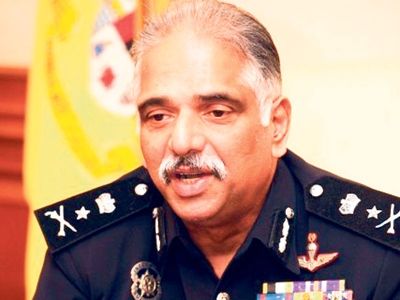
That was the first time I saw ACP Paramasivam, one of the most feared policemen at that time. When Klang and Taman Sentosa was polluted with dangerous criminals, ACP Param was posted to Klang, to 'take care' of it. A fearless cop, he went down to the ground to battle these criminals; and when Taman Sentosa was at the peak of it's criminal activities, ACP Param restored faith to the people. The hardcore criminals that was hiding in Taman Sentosa was gunned down. The rest of the pullepuchi criminals knew ACP Param was not an ordinary man, and ran away knowing that this man is not to be messed with…

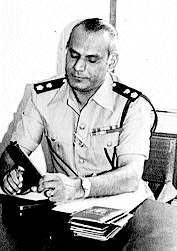
Similarly, another legendary cop that most of the younger generation's are not aware of is DSP Kulasingam. He rose to fame when he was assigned to capture the most notorious criminal in Malaysian history, Botak Chin. A bachelor, DSP Kulasingam dedicated his life to the police force. A mere mention of his name will make criminals tremble in fear, knowing DSP Kulasingam track record. As far as I know, this is the only policeman whom I know is more notorious than any other criminals out there, busting crime as it happens and fucking up criminals no matter how dangerous they were…

DSP Kulasingam

Quoting source:

"The first attempt was in 1975. He had stopped at a traffic light junction when 11 shots were fired at him. One of the bullets shattered his right rib, pierced his liver, and grazed his lungs.

He survived and went on fighting crimes.

"On April 7, 1976, Kula was shot in the stomach during a robbery at a jewellery shop in Paramount Gardens, Petaling Jaya.

He also survived

when a 44-pound jar of formic acid was splashed on his legs and chest;

when a tree fell, killing a helper instead;

when an axe-wielding man rushed at him;

and when a patrol car in Sarawak was ambushed and another officer with the same name as him was killed."

Both were exemplary policemen. They fought crime and they fought it hard. They went down to the ground and showed the criminals who's the boss. But because of politics nowadays, the policemen are facing a bad reputation. They're no longer feared, they're more known as someone whom can be bought by money and reputation. You know exactly what I'm talking about, but I can't elaborate further.

You can catch me for some shitty case, but your reputation is down the drain because hundreds of innocent Malaysians are dying in the streets as a result of snatch thieves and robbery. Why protect fucking criminal politicians who steals millions of dollars but kill an Indian who fought in a restaurant?

Read more at: http://ragedindian.com/2013/05/28/india-mati-di-lokap/ 

Kredit: www.malaysia-today.net
 

Malaysia Today Online

Copyright 2010 All Rights Reserved